We accept Medicare
Dental Sealants vs. Fluoride: Choose the Right One with Dr. Young S. Lee

When it comes to oral health, decay prevention is key to keeping your teeth healthy. Luckily, dental treatments like sealants or fluoride provide an effective barrier against cavities and many other dental problems. Patients often wonder whether dental sealants or fluoride treatments are right for them. To help you make an informed decision, we invite you to seek guidance at Elegantly Dental, where Dr. Young S. Lee is the person to speak with. You have the final say after all.
This blog explains the differences between dental sealants and fluoride, how they work, and their various advantages. Whether you want a preventive measure for your children or, as an adult, are seeking treatment to maintain your dental health, this guide will give you all the information you need.
What Are Dental Sealants?
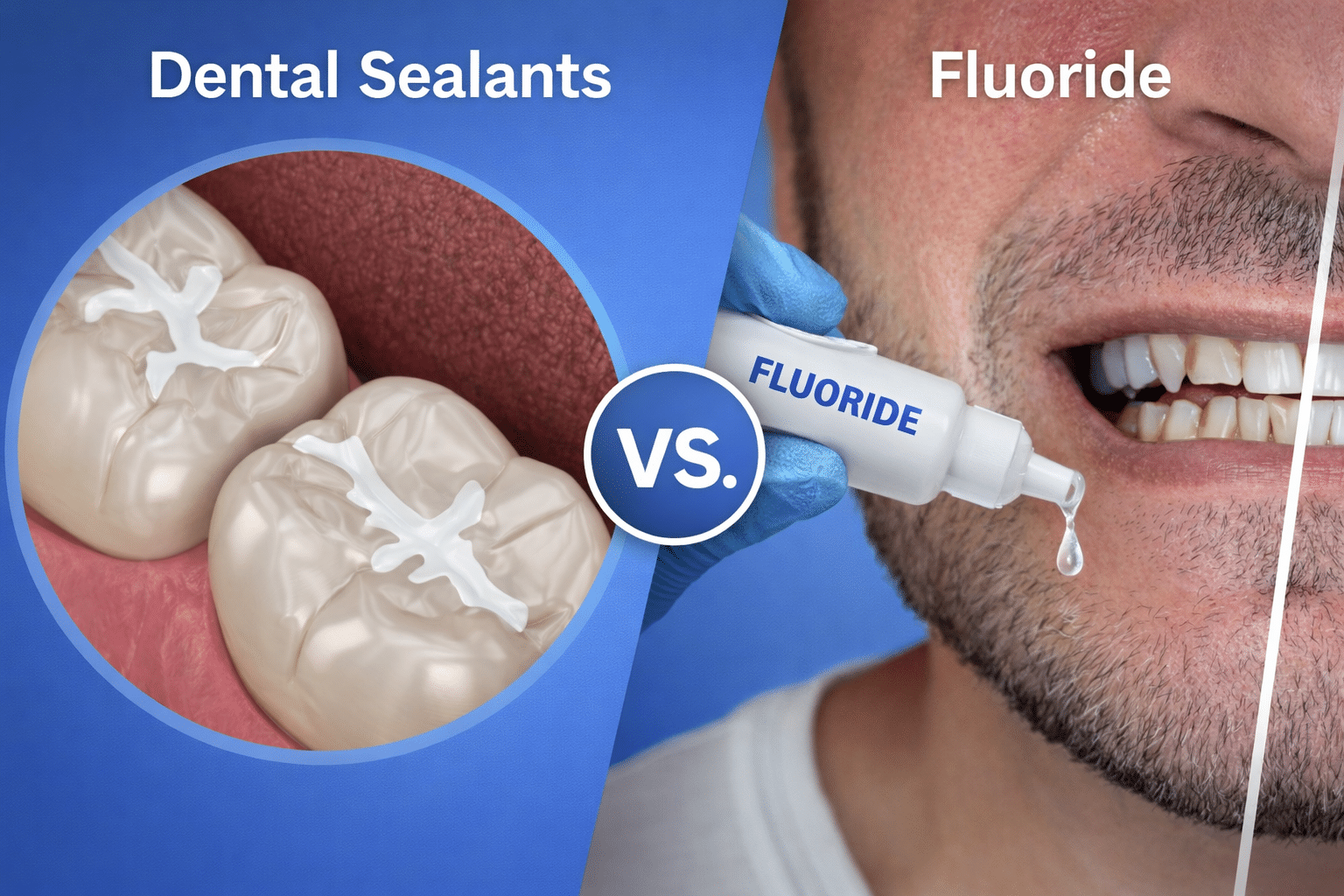
Dental sealants are thin protective coatings that are placed on the chewing surfaces of the back teeth (molars and premolars). Since the chewing surfaces have many small grooves and fissures, it is easy for bacteria to become trapped in them, leading to cavities.
When dental sealants are applied, they effectively cover the tooth’s surface and seal the areas where bacteria may otherwise accumulate, acting as a preventative measure. Most sealants are composed of plastic or resin; it is an affordable, easy way to help prevent decay from developing.
How Do Dental Sealants Work?
Applying dental sealants is a quick, painless process that is performed by an Ocoee dentist or dental hygienist. The tooth’s surface will be cleaned and conditioned before the dentist applies the sealant, which bonds to the tooth enamel and hardens to form a smooth barrier. The sealants will prevent bacteria from reaching the tooth’s enamel in its deep crevices.
Advantages of Dental Sealants
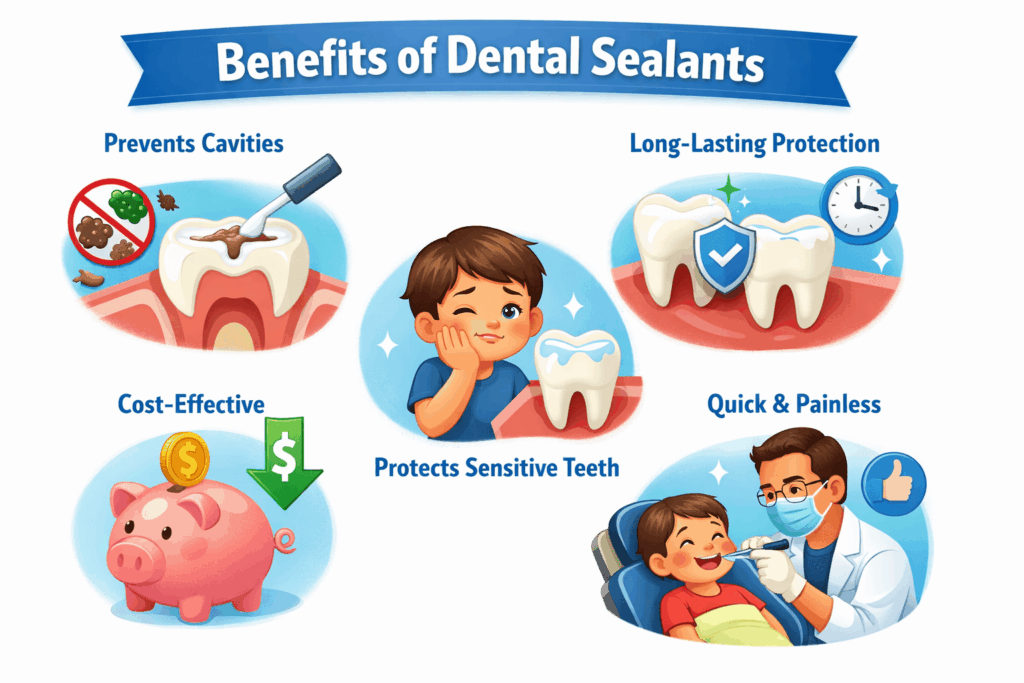
Dental sealants provide many advantages:
- Prevents cavities: By covering the grooves, dental sealants protect tooth enamel from damage by food particles and bacteria.
- Long-lasting protection: Dental sealants can provide years of protection against tooth decay.
- Cost-effective: Applying dental sealants is an economical, long-term method for preventing cavities and thus reducing future dental costs.
- Protects sensitive teeth: If your child has deep grooves in their molars, dental sealants can help prevent pain and discomfort from future decay.
- Quick and painless: Dental sealants can be applied without drilling or any shots; the procedure is very brief and painless.
What is Fluoride?
Fluoride is a natural mineral found in water, soil, and several food sources. The benefit it provides for healthy teeth is to strengthen the tooth’s outer covering, the enamel, and help make it more resistant to decay. When your enamel is weakened by acids from food and drink, fluoride remineralizes the area, strengthening the tooth’s ability to ward off cavities. It is included in toothpastes and mouthwashes and is applied professionally in dental offices.
How Does Fluoride Work?
Fluoride works on teeth by remineralizing enamel, which strengthens it. Acids in the mouth created by foods and drinks deplete important minerals within the enamel and leave the teeth more susceptible to decay. By depositing minerals within the enamel, Fluoride replaces what was lost, strengthening the enamel against future acid attacks.
While brushing and rinsing with a fluoride-containing dental product, professionally applied fluoride will bind with enamel in the mouth. Making teeth resistant against tooth decay, bacteria, and plaque build-up; keeping teeth clean and cavity-free. All in all, it provides a natural shield against tooth decay.
Benefits of Fluoride
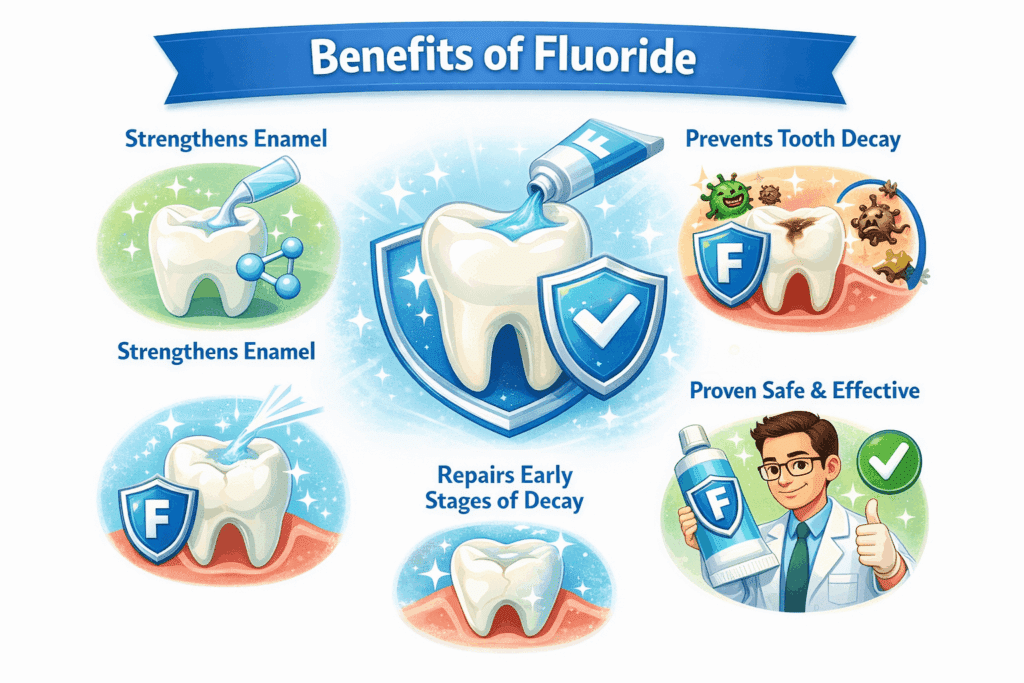
Fluoride benefits your teeth in many ways. For example:
- It strengthens enamel through remineralization, creating greater resistance to plaque acids and bacterial acids.
- It helps prevent tooth decay by protecting tooth enamel from acid attack, thereby reducing your risk of developing cavities.
- When cavities are identified early, fluoride helps repair tooth damage by remineralizing weakened areas of enamel.
It is a proven and safe treatment for preventing cavities in patients of all ages.
Sealants or Fluoride? Choose the Right Option
Dental sealants and fluoride both protect teeth, but for different reasons. Dental sealants provide the greatest protection for the biting surfaces of the back teeth. Fluoride, on the other hand, strengthens enamel and helps prevent decay over a larger area. Here’s a quick comparison between the two:
Dental Sealants:
- Shield the chewing surfaces of the rear teeth.
- Suitable for children and teenagers, or adults with their teeth starting to grow deep grooves in age joint.
- Protective layer that will last for several years before needing replacement.
- Transmits light to let air out of good-quality food inside.
- Sometimes, fewer teeth have a large unsealed groove; good patching can help further seal this one big hole. Keep a lid on the food.
- Prevent plaque and bacterial growth.
Fluoride:
- Strengthens enamel and makes teeth more resistant to decay.
- Relates to stains of tooth decay in the early stages.
- You can obtain fluoride through toothpaste, mouthwash, and professional treatments.
- These are the people, often with weak enamel or who frequently get cavities.
When Should You Choose Dental Sealants?
Dental sealants are often recommended for children and adolescents with many cavities. The back teeth, such as molars, are the most liable to get decay, sealed with a protective coating-sealants. Also, adults with deep grooves in their teeth or those with tooth decay who otherwise require a full-mouth reconstruction may benefit from sealants.
Using dental sealants is a fast, painless process for parents. They are invisible, or nearly so, and match the natural tooth. And if you have children, dental sealants are an excellent way to prevent cavities in their back teeth. Their mouth is protected from pain and tooth loss as the kid learns proper brushing techniques that will last a lifetime.
When Should You Get Fluoride?
Fluoride treatments are highly recommended for individuals with weakened enamel or people at high risk of getting cavities. If you have had dental treatment like root canal therapy in the teeth or even a full bridge reconstruction surgery, fluoride can help protect your teeth from further difficulties. And it’s also helpful for those who suffer from dry mouth, since this can lead to tooth decay.
Fluoride is good for everybody’s standard of living, even if you are a patient of a Midland Park dentist. If you value the long-term oral health of your teeth, a fluoride application can help ensure that your enamel stays strong and your mouth remains healthy. For this reason, regular fluoride treatments, carried out every few months at the dentist or at home, will maintain a smile that lasts into old age without needing any extractions decades later.
Which Option Is Right for You?
In the end, the choice between dental sealants and fluoride will depend on your individual dental needs. Dental sealants offer strong protection against cavities in the back teeth of children and teens, whereas fluoride strengthens tooth enamel and helps prevent decay. If you are uncertain about what is best for your oral health, it is wise to talk through options with Dr. Young S. Lee and the team at Elegantly Dental.
Protect Your Smile with Elegantly Dental
Deciding between dental sealants and fluoride treatments is a hard choice. They both work well in protecting teeth from decay. Whether you’re trying to keep cavities from forming in your child’s teeth or strengthen your own enamel, both methods have significant merits. We here at Elegantly Dental will assist you in making the best choice for your oral health.
Call us today to book an appointment and let us help you achieve a beautiful smile for years to come. Our team is always here to support your oral health at every stage.
Frequently Asked Questions
Are dental sealants painful?
No, dental sealants are not painful. The procedure involves applying a thin layer of resin to the back teeth, and it can be done quickly and easily without the need for anesthesia.
How long do dental sealants last?
Dental sealants can last anywhere from five to ten years with proper care. It’s important to visit your Ocoee dentist regularly to ensure your dental care remains effective and intact.
Can fluoride reverse cavities?
Fluoride can help remineralize areas of early tooth decay, but it cannot reverse advanced cavities. It’s most effective when applied at the first signs of decay.
Are fluoride treatments safe for children?
Yes, fluoride treatments are safe for children when applied by a professional. They help strengthen developing teeth and prevent cavities, especially for kids who may struggle with proper brushing techniques.
How often should I get fluoride treatments?
The frequency of fluoride treatments depends on your risk of cavities. For most people, fluoride treatments are recommended every six months during routine dental visits, but your Ocoee dentist can recommend a personalized schedule.
Can adults benefit from dental sealants?
Yes, adults can benefit from dental sealants, especially if they have deep grooves in their molars or are prone to cavities. Sealants provide an extra layer of protection against decay in the back teeth.


New Patients Welcome!
Optimal oral health starts with a customized treatment plan. Begin your treatment by scheduling a consultation today.